At the Sofaplex 23/04/13

Boston Strangler (R)

Keira Knightley, Carrie Coon.

Two female newspaper reporters investigate the strangling deaths of several women in 1960s Boston in this movie that feels as much about being a working mom as it does about true crime investigation. To that second element, the movie leaves open a lot of questions about whether the man eventually arrested for what Wikipedia says are 13 murders actually committed them — or committed all of them. I think the Wikipedia rabbit hole you may choose to follow after watching the movie is probably more informative about the crimes. The movie itself is more about how crime was reported in the early 1960s and the struggle of women in newspapers to break out of the lifestyle beats. Jean Cole (Coon) and Loretta McLaughlin (Knightley), both real-life journalists, have to deal with sexism in the newsroom and from the police as well as the demands of husbands and children at home. Watching them balance these demands and watching them dig into this story that has put them on the front page makes for an enjoyable bit of drama. B Available on Hulu.

Tetris (R)

Taron Egerton, Toby Jones.

The story of how a software developer and Nintendo got the licensing agreement for the game Tetris is the surprisingly tension-filled focus of this fun little tale. Henk Rogers (Egerton) stumbles on Tetris when he’s at the Consumer Electronics Convention and buys the licensing rights for the game in video game consoles and arcades in Japan. Or so he thinks. He plans to make a deal with Nintendo to produce the game, which he instantly realizes is an addictive hit, for them. But then he learns that Robert Stein (Jones), the man who had bought the rights to license the game from the Soviet tech agency where its creator worked, maybe hadn’t actually purchased the rights he thought he had. Or maybe the Soviet director who agreed to let creator Alexey Pajtinov (Nikita Efremov) sign the licensing agreement didn’t entirely understand what they were signing. Either way, here at the end of the 1980s, the motivations of the various Soviet officials involved might not be as clear. This little slice of 1980s nostalgia is a surprisingly fun, well-paced business story that pulls in the video games wars, the British Maxwell family and the fall of the USSR. B Available on Apple TV+.

Murder Mystery 2 (PG-13)

Jennifer Aniston, Adam Sandler.

Sandler and Anisiton return as married couple Nick and Audrey, who, after their European adventure, have quit their jobs to become professional private investigators. It’s not going great, exactly, but they’re chipping away at it, with Audrey pushing Nick to get a certification that she thinks will help their business. They’re in need of a getaway, though, and jump at the offer by a friend from the first movie, the Maharajah (Adeel Akhtar), to come to his wedding to Claudette (Mélanie Laurent), all expenses paid, on the fancy island he recently purchased. At first, all is grand, with iPhone wedding favors and closets pre-filled with the right attire and a welcoming cheese platter. But then, as so often happens around Nick and Audrey, someone is murdered and the Maharajah is kidnapped. Even after serious investigator Miller (Mark Strong), who happens to be the author of the book Nick and Audrey have been studying from, shows up, Nick and Audrey are still entangled in the investigation that leads them on another mayhem-filled tour of Europe.

I watched this movie exactly as I’m pretty sure you’re supposed to — namely, with half my attention while doing something else. This movie is built for this. A shot where we see the cheese knife in Nick and Audrey’s room lingers a considerable amount of time, like “here’s a thing you need to pay attention to — no, go ahead, finishing writing that check, we’ll keep the camera here until you can look up.” Everything about Murder Mystery 2 is relaxed and affable. Sandler and Aniston have good chemistry with each other. Most of the comedy is enjoyably silly — the lack of sharp edges anywhere here would probably be taxing in a theater, but at your house, where you can be half-heartedly scanning the emails you’ve ignored or folding laundry or intermittently snoozing, it’s fine. B Available on Netflix.

Air (R)

Middle-aged dudes in the mid 1980s pin their career futures and their hopes for the financial future of Nike on a young NBA rookie named Michael Jordan in Air.

I feel like even the movie is somewhat conscious of the fact that it is not the story of a legendary athlete or even, King Richard style, the struggles of that legendary athlete’s parent but the story of some guys who really wanted to capitalize on the status of a hopefully legendary athlete to boost their basketball shoe line. The movie is more stakes-adjacent than stakes-having.

Sonny Vaccaro (Matt Damon) is unimpressed with the meh candidates Nike is looking at to rep their unpopular line of basketball shoes in the coming season. Adidas and Converse are cool and that’s where the big-name players go — the Larry Birds and the Magic Johnsons — including Jordan, whose college career has made him an official One to Watch. Nike marketing guy Rob Strasser (Jason Bateman) thinks Sonny should just stick to the brief from company head Phil Knight (Ben Affleck) and use the limited funds given to the basketball division to sponsor three or four lesser lights. But Sonny wants to bet the house on Jordan, even if, as Jordan’s agent David Falk (Chris Messina) tells him, Jordan is almost certain to go with Adidas.

Sonny breaks with the protocol of this type of deal and goes around Falk, traveling to North Carolina to show up at the Jordans’ home. There he meets Michael’s dad, James Jordan (Julius Tennon), and his mom, Deloris Jordan (Viola Davis), who seems to be the true gatekeeper for Michael’s career. She admires Sonny’s persistence just enough to have a brief meeting with him at their house and then later she decides — over her son’s objections — to listen to Nike’s official pitch to Michael Jordan at the company’s Oregon headquarters. (No “Michael Jordan” really appears on screen except as a hazy figure, usually turned away from the camera, who is with his family during business meetings or as the actual guy in historical footage.)

The movie spends not quite enough time with Peter Moore (Matthew Maher), the man who designs the first Air Jordan prototype that the Nike team — which also includes Howard White (Chris Tucker) — hopes to use to convince Michael to pick Nike. His scenes include a fun element of the shoe’s design, which was a purposeful decision to make the shoe more colorful than the NBA technically allowed, with Nike offering to pay the shoe fines, a factor they even planned to work into their marketing. Personally, I found some bits about the artistry of the shoe a fun part of this movie about the making of a hugely culturally significant athletic shoe line. Like, more sneakers in this sneaker movie, would be my preference.

I think we’re maybe supposed to think the heart of this movie is Damon’s ostentatiously schlubby Sonny, with his genuine desire to help Michael Jordan become a legend and his “Gil really needs a sale” energy. And maybe a little bit of our heart is supposed to be with Rob and his sad divorced-dad tale of bribing his daughter with Nikes. I don’t think even the movie believes we’re rooting for Phil Knight, who is giving flaky proto-tech-bro vibes. But come on, with no real Michael Jordan in the picture, the heart of the movie is Davis’ Deloris Jordan, who knows the score when it comes to both her son’s abilities and the way the world is going to want things from him. Casting Davis makes Deloris an easy character to care about — Davis brings weight and substance to the sort of dippy story of, not unlike Tetris, a licensing deal.

Without Davis, I think this movie would feel too lightweight, too lacking in stuff to fill out its nearly two-hour run time. With Davis, the movie feels just substantial enough to justify being in a theater — but just barely. It felt very similar to me to those HBO historical-events movies, particularly to something like The Late Shift, about the Jay Leno-David Letterman Tonight Show story.

If you are moderately interested in this side story from the career of Michael Jordan, Air is moderately interesting. C+

Rated R for language throughout, according to the MPA on filmratings.com, but probably also to signify to grown-up movie goers that this is a grown-up movie where nothing explodes, which is accurate. Directed by Ben Affleck with a screenplay by Alex Convery, Air is one hour and 51 minutes long and distributed by Amazon Studios, which means that it will eventually show up on Prime Video, though it is slated for a longer theatrical release than originally planned, according to Wikipedia.

The Super Mario Bros. Movie (PG)

It’s-a him, Mario, in an animated adventure that really just made me feel some nostalgia for OG Nintendo Mario in The Super Mario Bros. Movie.

Not unlike AppleTV+’s Tetris, which somehow seems like the mashup of the two theatrical releases I watched this week, The Super Mario Bros. Movie made me think more about the video game from which it originated — in my case the console and Game Boy versions of the game in 1990something — than anything happening in the movie itself. I was the most casual of video and arcade game players back in the 20th century so it’s interesting how much both games still were part of the wider culture.

Here, we meet brothers Mario (voice of Chris Pratt) and Luigi (more engagingly voiced by Charlie Day), who have just started a plumbing business and sunk all their money into a pretty great TV ad, chock full of “Mama Mia!” type accents from these two otherwise nonspecific American-accented guys. I mention this only because the ad is sort of charmingly goofy in a way most of the rest of this movie isn’t.

After their first job goes wrong because of an angry dog, they try to “save Brooklyn” by fixing some water main problems in the road. Instead, though, they get sucked into a, let’s say, alternate dimension and, while traveling along a rainbow thing I’m just going to call bifrost, are separated. Luigi is flung into a lava world ruled by Bowser (voice of Jack Black), sort of a large battle-turtle intent on capturing all domains and using what Wikipedia tells me is a Super Star to gain invincibility. Mario lands in Mushroom Kingdom, which is sad because he doesn’t like mushrooms, but it’s a generally brighter happier place even if it too is under threat of invasion by Bowser.

Mushroom Kingdom’s Princess Peach (voice of Anya Taylor-Joy) plans to get the support of King Cranky Kong’s (voice of Fred Armisen) army to face Bowser and his army, which leads to Mario fighting the king’s son Donkey Kong (voice of Seth Rogen) and a fun sorta-friendship between the two, which was one of this movie’s better elements. Mario wants to defeat Bowser to get Luigi back — their brotherly relationship is also a nice element but, as they spend most of the movie apart, we don’t get nearly enough of it.

There is a flatness to this movie — it’s colorful and action-packed, but there just isn’t a lot to grab on to in terms of the story or the characters we spend the most time with. Pratt’s Mario is kind of a nothing despite being at the center of this story. He doesn’t have the personality of, say, Pratt’s Emmet in the Lego movies. His adventure partners Donkey Kong and Luigi bring a little something to their roles— the notes of sweetness and weirdness I think you need to make this kind of thing work — but not enough to give the whole movie life. Princess Peach is also kind of an empty character. I realize this is a cartoon based on a video game, but I feel like the movie just hangs it all on the admittedly eye-catching, gameplay-riffing-on visuals without giving the movie even the, uhm, depth of, like, the Trolls movies or that odd noir Pikachu.

The motivations of Bowser (to marry Princess Peach whether she likes it or not) are a little disturbing and a bunch of adorable creatures are threatened with slaughter but this is otherwise probably a fairly older-elementary-schooler acceptable movie. It’s just not a particularly memorable one. C+

Rated PG for action and mild violence, according to the MPA on filmratings.com. Directed by Aaron Horvath and Michael Jelenic and co-directed by Pierre Leduc and Fabien Polack with a screenplay by Matthew Fogel, The Super Mario Bros. Movie is an hour and 32 minutes long and is distributed in theaters by Universal Studios.

Featured photo: The Super Mario Bros. Movie.

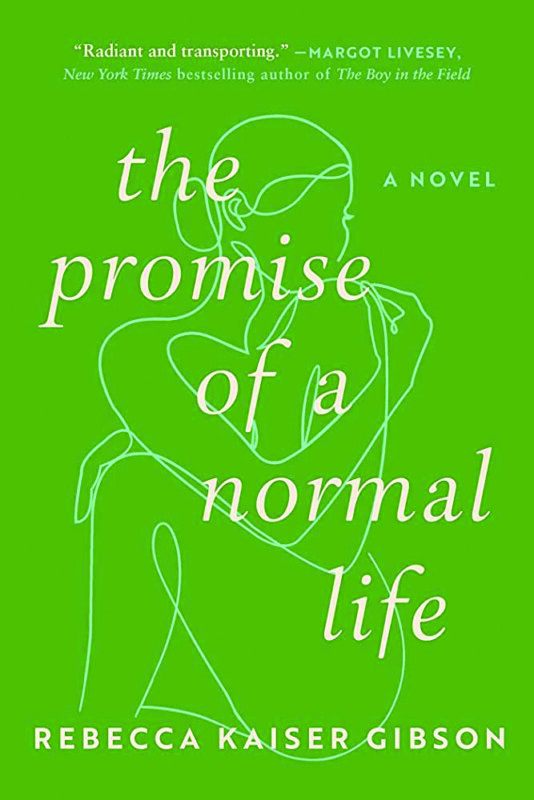
The Promise of a Normal Life, by Rebecca Kaiser Gibson

The Promise of a Normal Life, by Rebecca Kaiser Gibson (Arcade, 266 pages)

The pantheon of bad mothers is crowded, from Medea to Mommy Dearest. The latest inductee is Polina, a Jewish physician and mother of two who dabbles in motherhood the way some people dabble in a hobby that they are only vaguely interested in.

Polina curdles the childhood and adolescence of the unnamed narrator of The Promise of a Normal Life, a debut novel from Marlborough resident Rebecca Kaiser Gibson. She is a perfectly coiffed, upwardly mobile chain-smoking pseudo-villain who, in her perpetual self-absorption, is unaware of how she is failing at her most important job. Her oldest daughter, sensitive and unusually perceptive, sees all.

The novel, told in first person, opens in 1967 with the narrator at age 18 en route to Israel on a ship. It is an impromptu trip during a break from the University of Sussex and marks the first time she feels the promise of the freedom of adulthood, of the glamor and adventure that might await away from the stifling control of Polina and Leonard, the narrator’s father. This is where I belong, she thinks. As it so often does in real life, reality soon rudely barges in. She is sexually assaulted by a hairdresser on the ship in an encounter that she can only fuzzily remember, having been asleep at the time.

Her meekly passive response turns out to be a pattern of her life, seemingly the result of growing up with a larger-than-life mother who had provided for her children in material things but did not bestow any emotional gifts. The reason was evident, not only in her behavior but in her words.

“Polina told me once that she’d decided, when she was in Scotland talking to some women about how they would treat the children they would have, that the most important thing was to keep your own life first. The children should stay in their place,” the narrator remembers.

That hands-off philosophy was enhanced by Polina’s employment of a housekeeper, who prepared most of the meals, did the housework and did much of the work of tending the children. When Polina did mother, she did it brusquely, as when she would bring consomme to a sick child in bed, command them to drink lots of liquids, and then depart.

Even once her daughters are young adults, they are people to command, not to enjoy. When the narrator meets the parents of the man she will marry, she is surprised by their relationship. “When I actually met her, I was struck by how much Tom’s mother seemed to admire her son. I didn’t know how to understand a mother who made room for her child’s maturity.”

And it wasn’t just Polina. When her daughter and Tom decide to get married, Leonard and Polina could not let go of their roles. “My father could barely look at me, his own child, could hardly stand to see my green eyes doting on those blue ones. Leonard could not prevent me, but he could take over,” pushing the couple to marry on the parents’ timetable.

While the narrator is a thoughtful, intelligent and self-aware young woman who finishes college and starts a career, she struggles to see how she is taken advantage of by men. The reader, as well, is not easily able to see the next trainwreck coming as the narrator navigates adulthood.

In my own family lore, there is a story we tell about my then-5-year-old son who, during an apparently uneventful movie, leaned over to his great-grandmother and said “If they don’t start blowing up stuff soon, I’m outta here.”

There will be that temptation at times for readers who grew up on Dan Brown or James Patterson, those who expect something explosive to happen in the last paragraph of every chapter, which will then yank them into the next.

The Promise of a Normal Life moves slowly; there’s not much in the way of TNT. It is a quietly revealing character study that wields its power in lyricism and detail. Gibson, a widely published poet who taught creative writing at Tufts University for 23 years, endows her narrator with her own gifts of observation and wisdom. At one point, when the narrator and her husband move to Los Angeles, she joins a synagogue having suddenly felt attached to Jewish heritage. (“Suddenly it seemed interesting, instead of ordinary and assumed. The desert dry air had given me room to imagine.”) A rabbi later tells her, “You are a mystic, a true Jewish mystic,” which in the context felt like something of a come-on, but still resembled truth.

Without spoilers it’s difficult to discuss the last quarter of the novel, but it extends to the end of Polina’s life, when her daughter, for the first time, addresses her mother by something other than her first name.

For much of the novel it is unclear just how damaging Polina was — there are hints that there might be something more than just garden-variety bad parenting involved. At the same time, the narrator is at times so fragile that it also seems possible that the hard-driving Polina will eventually be vindicated — that she wasn’t the problem, but something else was. It’s a thin mystery within the complex tapestry of this family, but it works. The Promise of a Normal Life offers anyone with a — how to put it? — challenging mother a compelling sense of solidarity. A

Album Reviews 23/04/13

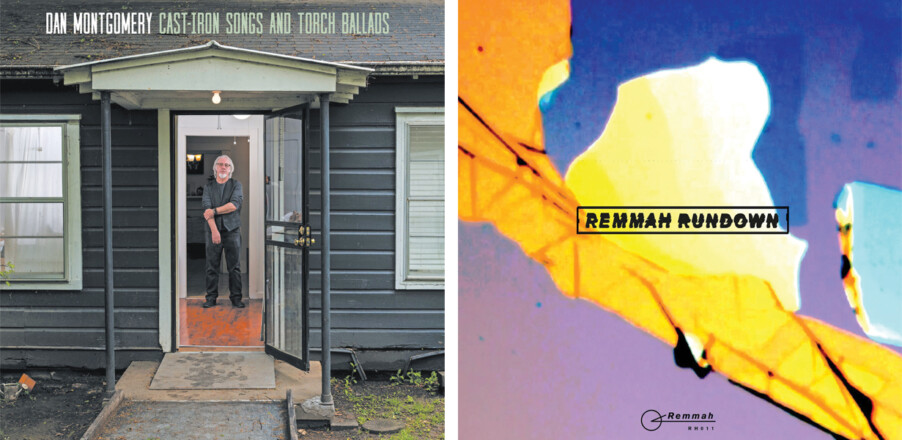
Dan Montgomery, Cast-Iron Songs and Torch Ballads (Fantastic Yes Records)

The overall takeaway from “Start Again,” the opening tune from the New Jersey-bred singer-songwriter’s seventh full-length record, is, if you ask me, redolent of Iggy Pop singing for Bread. So it’s vintage-sounding, taxicab-radio stuff, which is apparently the way he started his career, fresh from his teenage years, which were spent, from the age of 14, playing Grand Funk and Bad Company covers in bars, followed by a stint busking at coffee houses and such. The story here is that he “came into possession of a Danelectro [vintage type of guitar], plugged it into an amp and new songs immediately came pouring out,” which is sometimes all it takes to come up with a very inspired-sounding album. To pinpoint the music a little better, it’s floating-on-a-cloud Americana-rock, with some diversions into ’80s-pop-rock (the Dire Straits-ish “In For A Penny”), cowboy-hat jam-band grooving (“Lonesome Train”), early Bad Company (“Beaumont”) and things of that nature. It’s too sturdy (and sometimes too muddy) to be labeled a fedora-rock joint, so I’m down for it for what it is. A

Various Artists, Remmah Rundown (Remmah Records)

Just when I thought I was out of the techno club scene, they drag me back in, I tell you. This compilation comes to us from Northern Irish DJ, producer and label head Hammer, a.k.a. Rory Hamilton, who wants to clue us in to the electronic music scenes in Glasgow and Ireland, or at least the parts he’s familiar with. Like with basically any decent club mix, there’s plenty here to make your chillout experience better, which brings us to the part where I try to differentiate this stuff from early Diplo and all that kind of thing. I could fib for effect and say it’s jaw-droppingly innovative, these average-tempo dance beats, but let’s not bother; I’ve heard wub-wub like Hammer’s “Sickwave” before, and Rohypnol-glitch-tech like Remmy’s “I Know,” for that matter, and so have you, but Hamilton obviously isn’t trying to reinvent the wheel, just remind people it exists. Solid all around. A

Playlist

• April 14 is a Friday, which means that you will have an extra day or so before you have to send Uncle Sam the money you owe him for taxes, or at least I think that’s how it works, I mean, you do you, I don’t think the IRS really cares anyway, but let’s kick off this week right away, because there’s a lot to get to, starting with 80-year-old bikini lady Ann-Margret, who was mostly famous for hanging around in Las Vegas with none other than Elvis, as well as being lasciviously ogled by Johnny Carson every time she appeared on the Tonight show during the ’60s and ’70s. No, I’m not kidding, Ann-Margret has a new album coming out this Friday, Born To Be Wild, which may or may not be a reference to the Steppenwolf song that came out when Thomas Jefferson was president, or maybe earlier, I honestly forget. You know, I’m just checking the Metacritic.com aggregate score for all of Ann-Margret’s films, and it’s dead even at this writing. Critics thought some of her movies were really dumb, like The Villain and The Santa Clause 3: The Escape Clause, whereas they liked some of her other movies, for instance 1975’s Tommy, which featured Jack Nicholson and Keith Moon. But I digress, which usually happens when I’m reviewing albums from 1960s pinup girls, so let’s get to the gettin’ on and have a listen to the title track, come on, don’t be shy. Ack, her backing band on this tune is the Fuzztones, and it’s not completely horrible. OK, it is, but she’s on key for a few bars, unless I’m hearing things. Other notes: The Who’s guitarist Pete Townshend can be heard on this album’s cover version of the Everly Brothers’ classic “Bye Bye Love”; other guests include Joe Perry, Steve Cropper, Rick Wakeman and Chip Z’Nuff.

• No way, bro, a new Metallica album, called 72 Seasons, I’m totally down with that! Say, has anyone ever noticed that the band’s drummer and leader, Lars Ulrich, is like the Elon Musk of heavy metal, like, remember when they did the 5.98 EP just to remind folks that they were still edgy and punk, even though they were just about to get rid of guitar solos for a few albums in order to be like Papa Roach, because people don’t want complicated music, man, they just want to be stupid, and now we have two million bands that sound exactly like Bury Your Dead? No? Well it’s all Metallica’s fault that metal sucks now, but let’s try to get past that and go listen to a new song from this Metallica album, “If Darkness Had a Son,” before the album premieres in cinemas on the 13th (no, I’m not kidding)! Hm, it’s got a cool syncopated riff, it’s not completely horrible, well, at least before the vocals come in, all dishwasher-safe. Iron Maiden fans would like this, I guess.

• Ack, just when you thought you’d never have to hear aughts-era Canadian indie-pop ever again, look, it’s Feist, with her new album, Multitudes! Lol, remember when she lent her song “1234” to that iPod Nano TV ad and said something like “Well hey man, at least it wasn’t a preconceived marketing ploy” or whatever? Classic stuff, but the new single, “Hiding Out In The Open,” finds Feist in unplugged Joni Mitchell mode. The song isn’t completely horrible, which isn’t to say it’s terribly catchy or whatnot.

• We’ll end with Fruit Bats, remember those guys from a few years ago? That’s cool, I don’t remember a thing about them other than the fact that their PR people were demanding that I write about them. Their new LP, A River Running To Your Heart, includes a song called “Rushin’ River Valley,” sort of a cross between Decemberists and Guster, it’s breezy and nice, it’s fine by me.

If you’re in a local band, now’s a great time to let me know about your EP, your single, whatever’s on your mind. Let me know how you’re holding yourself together without being able to play shows or jam with your homies. Send a recipe for keema matar. Message me on Twitter (@esaeger) or Facebook (eric.saeger.9).

Blood orange tequila fizz

I read a lot of travel books — mostly written by confused, bumbling Europeans trying to make sense of life in unfamiliar cultures. I think I like them because I generally feel confused, bumbling around in all cultures.

“Bon jour, mon frère,” someone says to the writer of one of the books. “‘Mon frère,’” he thinks. “Why frère? Why is he calling me his brother, instead of his friend? What’s going on? Am I in trouble?”

“Good morning,” the nice lady at the grocery store says to me, “have a good week.”

“What does she mean by that?” I wonder, for the next half hour.

At any rate, these travel writers say that one of the most frustrating, confusing and ultimately useful phrases that they run into is “Insh’Allah” — “God willing.”

“Will the work be done on time?” “Will I make it through this surgery?”

“Of course.”

Whew.

“Insh’Allah.”

Eek.

I mention this because my poor wife — and pretty much every wife, when it comes down to it, really — has to deal with a similar thing.

“Will you please do this simultaneously important and very easy task for me, please?”

“Of course.” Eventually.

Granted, the “Eventually” is unspoken, but it’s undeniably there.

Which is how we ended up with a basket of elderly blood oranges sitting on our counter, feeling their life force slowly flicker out and leak into the Universe. Nobody in the house remembers how we ended up with blood oranges in the first place. They are beautiful but not easy to do anything with. They aren’t great for out-of-hand eating. They aren’t very sweet. They have seeds. They have a nice flavor and could theoretically make a good marinade or something, but the blood-red color can be a bit off-putting. It really calls for being used in a cocktail.

So my wife was being more than reasonable when she asked me to please, for the sake of all that is good and decent, do something with the basket of blood oranges on the counter.

“Of course, my Delicate Persimmon Blossom.” *Eventually*

My wife sighed with tired resignation, an emotion that has come to characterize most of her interactions with me, her soulmate.

It speaks more to luck, rather than good timing on my part, that I caught the blood oranges minutes before they went bad.

Blood orange syrup

Zest some blood oranges, however many you have. Put the zest into a small saucepan.

Put the pan on your scale, zero it out and juice the oranges into it. Write down how much the juice weighs.

Tare the scale, then add an equal amount of sugar.

Heat the mixture over medium heat, until it comes to a boil and the sugar dissolves.

Remove it from the heat, let it sit for an hour, then strain it.

That’s great, but what do you actually do with blood orange syrup? Aside from adding it to your yogurt, which is great, by the way.

Blood orange tequila fizz

  • 2 ounces blanco tequila – I like Hornitos
  • 2 ounces fresh squeezed lime juice
  • 1 ounces blood orange syrup (see above)
  • 2 ounces ginger beer

Combine the tequila, lime juice and syrup over ice in a cocktail shaker. Shake ruthlessly.

Pour — ice and all — into a large rocks glass. Top with the ginger beer, and stir gently.

Sip cautiously — because let’s face it; you are deeply suspicious about this combination of flavors — and then feel relief and a tiny amount of trust in the Universe seep back into you.

The first thing you will notice about this cocktail is how beautiful it is. It is deep red and seems to make nonspecific but compelling promises to you. It tastes as good as it looks. The blood orange and lime work together to give you layers of citrus flavor. The tequila and ginger beer give it some backbone.

When you’ve had a hard week, when the kids are especially loud, when the other dance moms have gotten on your last nerve, when you find yourself wondering what the point of all of this *gesturing vaguely around* is, this drink will throw you a rope.

Featured photo: Blood Orange Tequila Fizz. Photo by John Fladd.

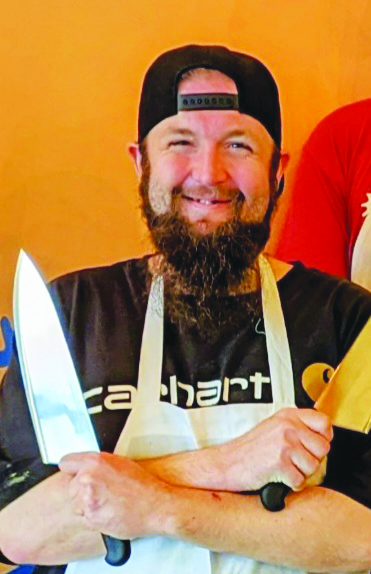
In the kitchen with Alan Milne

Alan Milne is the head chef of the new full-service kitchen at Spyglass Brewing Co. (306 Innovative Way, Nashua, 546-2965, spyglassbrewingco.com), which relocated across Nashua to its current spot in January. Originally opening at 2 Townsend West in the Gate City in October 2018, Spyglass is known for its hazy IPAs and saisons, many of which feature tropical fruit or citrus flavors. The new food menu, created by Milne and his sous chef, features creative takes on options like smash burgers, sandwiches, tacos, salads and appetizers. Prior to joining Spyglass, Milne worked as a chef at Stones Social in Nashua, and he also has experience working in restaurants in Portland, Oregon, and overseas in Italy.

What is your must-have kitchen item?

A chef’s knife and a pair of tongs. With those two things, I can pretty much achieve anything I need to get done.

What would you have for your last meal?

I’d start with a spicy tuna roll for an appetizer, and then a nice rib-eye steak cooked over fire with some mushrooms and Gorgonzola mashed potatoes. Then for dessert, some Krispy Kreme doughnuts and an espresso.

What is your favorite local restaurant?

I’ve got to give it up to Surf. Most of my adult life, they’ve been putting out really good food, and I’m a sucker for a raw bar.

What celebrity would you like to see eating at the brewery?

My first thought was Tom Brady, but then I realized that he doesn’t eat food [laughs], so let’s get Scott Zolak up here to Spyglass!

What is your favorite thing on your menu?

The falafel gyro is my favorite thing. I love the burgers and I’m a burger guy, but I love the Mediterranean and Middle Eastern flavors. That’s kind of where my palate gravitates to. … We take dried chickpeas, we soak them overnight until they are soft, and then we grind them with fresh herbs, onions and garlic, and then we form them into balls and fry them. … Then that goes on a pita with arugula, some marinated tomatoes, spiced cucumbers, pickled red onions and then a tahini sauce and a smoked hot sauce.

What is the biggest food trend in New Hampshire right now?

I think you’re seeing more and more vegetarian options. … I also think affordability is a big one.

What is your favorite thing to cook at home?

I work a lot and I get paid to cook, so I don’t really cook much for myself. But when I do, it’s usually cheap braised meats. I love throwing something in a pot or in the slow cooker and then gobbling it up on top of some mashed potatoes or some pasta.

Spyglass burger sauce
From the kitchen of head chef Alan Milne of Spyglass Brewing Co. in Nashua (makes 1 quart)

2½ cups mayonnaise
1 cup ketchup
¼ cup pickle juice (preferably bread and butter)
¼ cup capers, chopped
½ Tablespoon sugar
2 teaspoons mustard
1 teaspoon sambal (chili garlic paste)
½ teaspoon garlic powder
½ teaspoon onion powder

Combine all ingredients together with a whisk until thoroughly combined.


Featured photo: Alan Milne, head chef of Spyglass Brewing Co. in Nashua. Courtesy photo.

Stay in the loop!

Get FREE weekly briefs on local food, music,

arts, and more across southern New Hampshire!