Three Thousand Years of Longing (R)

Three Thousand Years of Longing (R)

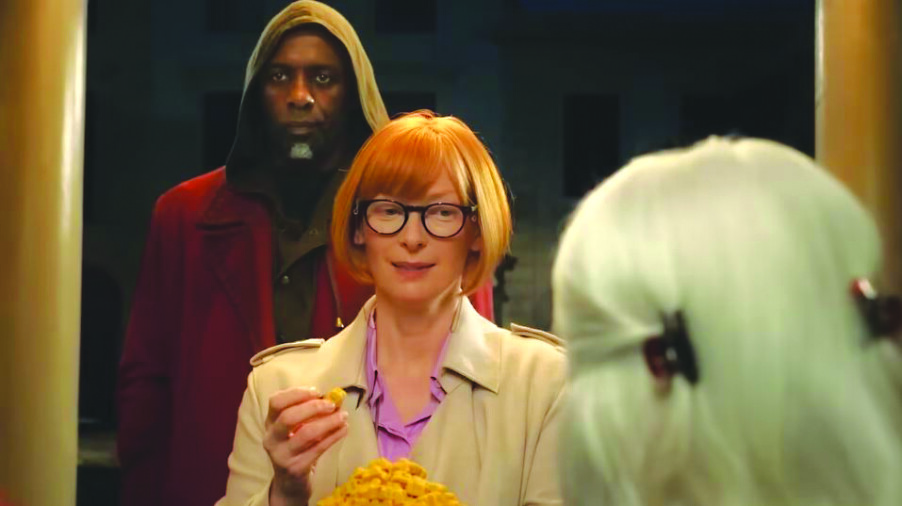
Tilda Swinton and Idris Elba tell each other stories in Three Thousand Years of Longing, a vividly realized bittersweet fairy tale for grown-ups.

Literature professor Alithea (Swinton), who describes herself as content in life and alone by choice, travels to Istanbul to talk narratives with other academic literature types. Stories and mythology aren’t just a professional pursuit for her; early on we see her spot otherworldly beings in the airport and lecture hall and later we learn that she had a long childhood friendship with a boy who wasn’t quite there but also was something more than imaginary.

Perhaps this makes her the perfect person to unleash a djinn when she cleans a small bottle she has purchased as a souvenir. The Djinn (Elba), who is at first giant but makes himself more Elba-sized to better blend in with humans, is desperate for her to make three wishes. Three wishes will free him from being tethered to the bottle and this realm and he will be able to return to the land of the djinn. But Alithea is well aware of the monkey’s paw-like effect of making wishes. It never works out, not in any story, she tells him. I’m not that kind of djinn, he tries to convince her. In the process of arguing with each other over the wisdom of making wishes and how it can be done without leading to disaster, the Djinn tells Alithea his story, which starts during his long-ago infatuation with his half-djinn cousin Sheba (Aamito Lagum), his imprisonment in a bottle and the times when he attempted to be released.

Alithea meanwhile explains her life as a person who is “solitary by nature” and how it has led her to look for emotional connection through stories.

Well past the halfway point of this movie I realized that most of the present-day action takes place in a hotel with robe-clad Swinton and Elba just talking to each other. I mean, just on its face, there are worse things in the world than Swinton and Elba just hanging out. But I also liked how their conversation about the nature of stories weaves in and out of these sumptuously lovely flashbacks to the Queen of Sheba’s palace and the court of Suleiman the Magnificent. It’s the tart note that brings balance to the richness of the fairy tale-inflected historical settings and magical visuals.

Three Thousand Years of Longing feels like the sort of movie where if I picked apart the story (particularly its final third) I’m not entirely certain it would all make sense but as a whole it hangs together so nicely and is such a pleasure (at times a sort of melancholy pleasure) to sit through that I’m also not inclined to pick it apart. It’s beautiful, sweetly nerdy (one person’s heartfelt desire is to, basically, know more STEM) and has a kind of mature kindness.

Or, if that sounds “blah,” it has shimmery magic, the delightful Swinton telling off some racist neighbors and an otherworldly Idris Elba. And, with spiritual cousin Everything Everywhere All At Once, it proves that badass fantasy can revolve around the emotions and adventures of middle-aged ladies. B+

Rated R for sexual content, graphic nudity and brief violence, according to the MPA on filmratings. Directed by George Miller and written by George Miller & August Gore (based on an A.S. Byatt short story called “The Djinn in the Nightingale’s Eye,” Three Thousand Years of Longing is an hour and 48 minutes long and distributed by Metro-Goldwyn-Mayer Pictures.

Featured photo: Three Thousand Years of Longing.

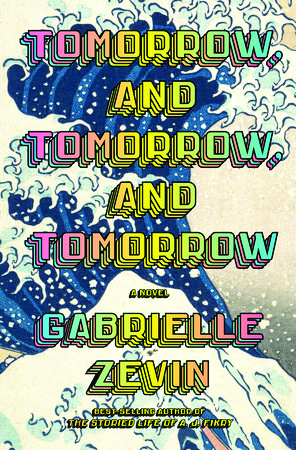
Tomorrow, and Tomorrow, and Tomorrow by Gabrielle Zevin

Tomorrow, and Tomorrow, and Tomorrow by Gabrielle Zevin (Knopf, 416 pages)

If a great writer is someone who can take a subject like video games — loved by some, maligned by others, inconsequential to the rest — and use it to weave together a story that even the latter two categories of people can appreciate, then Gabrielle Zevin is a great writer.

Tomorrow, and Tomorrow, and Tomorrow is about love, friendship and, yes, video games. That might sound like the premise of a young adult novel written to entice middle school gamers to put down the controller and pick up a book, but no; this is a beautifully written, emotionally complex story that unravels over the span of 30 years through various characters’ points of view — though mainly protagonists Sam Masur and Sadie Green’s — and in settings that range from hospitals to living rooms that serve as creative epicenters and offices, to inside the world of a video game that Sam creates.

Sam and Sadie met as kids in a hospital, where Sam was recovering from a car accident that killed his mom and Sadie was visiting her sister, who had cancer. Their very first interaction drew me in, with some of the best dialogue I’ve ever read. Sadie walks into the hospital’s game room, where Sam is playing Super Mario Bros. She sits down next to him and watches him play.

“Without looking over at her, he said, ‘You want to play the rest of this life?’

Sadie shook her head. ‘No. You’re doing really well. I can wait until you’re dead.’

The boy nodded. He continued to play, and Sadie continued to watch.

‘Before. I shouldn’t have said that,’ Sadie apologized. ‘I mean, in case you are actually dying. This being a children’s hospital.’

The boy, piloting Mario, climbed up a vine that led to a cloudy, coin-filled area. ‘This being the world, everyone’s dying,’ he said.

‘True,’ Sadie said.

‘But I’m not currently dying.’

‘That’s good.’

‘Are you dying?’ the boy asked.

‘No,’ Sadie said. ‘Not currently.’

‘What’s wrong with you then?’

‘It’s my sister. She’s sick.’

‘What’s wrong with her?’

‘Dysentery.’ Sadie didn’t feel like invoking cancer, the destroyer of natural conversation.”

Thus begins their relationship, though it’s derailed after 14 months when Sam finds out that Sadie has been counting the time she spends with him at the hospital as a community service project: “Their friendship amounted to 609 hours, plus the four hours of the first day, which had not been part of the tally.”

Sam and Sadie reconnect in their college years after a chance meeting at the subway station. They end up collaborating on a video game, Ichigo, which is a huge success and propels them toward future collaborations. Over the years, though, that work is complicated by emotions and miscommunications, deep love and unrequited romantic love, outside forces and other people, like Sam’s roommate, Marx, and Sadie’s professor/lover, Dov. These characters are what make Tomorrow, and Tomorrow, and Tomorrow the compelling story that it is, and they’re a big part of the reason why people who don’t like video games can still appreciate this book. These are characters that readers can care about, and get mad at, and grieve with.

Zevin’s writing is exquisite; there are so many passages and sentences in the book that are worth reading more than once — an especially good thing when time jumps and perspective shifts get a little confusing and you need to stop for a moment and reread to make sure you know what’s going on.

There are some people who are not going to be able to get past all the video game references, because there are a lot. There are references to old-school games, and there are some technical aspects related to the behind-the-scenes work of creating a game, like design and programming and graphics engines (I’m still not quite clear on what such an engine does or why it can seemingly make or break the quality of a game, but those details don’t take away from the ability to understand what’s going on). There’s also a whole section that takes place in a video game called Pioneers, and while it wasn’t my favorite part, I can appreciate the depth that it adds to the storyline, as the game becomes an essential part of Sam and Sadie’s relationship.

I haven’t considered rereading a book in years — who has the time when there are so many new books waiting to be read — but this is one that I’m definitely going back to again, to savor the prose, spend more time with the characters and possibly get a better handle on what a graphics engine does — not that it really matters. A


Book Events

Author events

PHIL PRIMACK presents Put It Down On Paper: The Words and Life of Mary Folsom Blair in a Literary Lunchtime event at Gibson’s Bookstore (45 S. Main St., Concord, 224-0562, gibsonsbookstore.com) on Thursday, Sept. 8, at noon.

MINDY MESSMER presents Female Disruptors: Stories of Mighty Female Scientists at the Bookery (844 Elm St., Manchester, 836-6600, bookerymht.com) on Wednesday, Sept. 14, at 5:30 p.m. Free admission; register at bookerymht.com.

SUSIE SPIKOL, a naturalist at the Harris Center for Conservation Education in Hancock, will discuss her book The Animal Adventurer’s Guide: How to Prowl for an Owl, Make Snail Slime, and Catch a Frog Bare-Handed, on Saturday, Sept. 17, at 11 a.m. at Toadstool Bookshop (12 Depot Square in Peterborough; toadbooks.com, 924-3543).

JOSEPH D. STEINFIELD presents Time for Everything: My Curious Life at Gibson’s Bookstore (45 S. Main St., Concord, 224-0562, gibsonsbookstore.com) on Tuesday, Sept. 20, at 6:30 p.m.

BOB BUDERI author of Where Futures Converge: Kendall Square and the Making of a Global Innovation Hub will beat the Bookery (844 Elm St., Manchester, 836-6600) on Wednesday, Sept. 21, at 5:30 p.m. for a discussion with special guests C.A. Webb and Liz Hitchcock. Free admission; register at bookerymht.com.

SUSIE SPIKOL, a naturalist at the Harris Center for Conservation Education in Hancock, will come to Gibson’s Bookstore (45 S. Main St. in Concord; gibsonsbookstore.com, 224-0562) to “teach your kiddos how to find critters in their neighborhood” on Saturday, Sept. 24, at 11 a.m. with her book The Animal Adventurer’s Guide: How to Prowl for an Owl, Make Snail Slime, and Catch a Frog Bare-Handed, according to a press release. The book, which is slated for release Sept. 13, features “50 hands-on activities and adventures that bring you closer to wild animals than you’ve ever been,” the release said. Spikol will also bring supplies to do one of the crafts from the book.

MARGARET PORTER presents The Myrtle Wand at Gibson’s Bookstore (45 S. Main St., Concord, 224-0562, gibsonsbookstore.com) on Wednesday, Oct. 12, at 6:30 p.m.

Poetry

OPEN MIC POETRY hosted by the Poetry Society of NH at Gibson’s Bookstore (45 S. Main St., Concord, 224-0562, gibsonsbookstore.com), starting with a reading by poet Sam DeFlitch, on Wednesday, July 20, from 4:30 to 6 p.m. Newcomers encouraged. Free.

MARTHA COLLINS and L.R. BERGER hosted by the Poetry Society of NH at Gibson’s Bookstore (45 S. Main St., Concord, 224-0562, gibsonsbookstore.com) on Wednesday, Nov. 16, from 4:30 to 6 p.m.

Writers groups

MERRIMACK VALLEY WRITERS’ GROUP All published and unpublished local writers who are interested in sharing their work with other writers and giving and receiving constructive feedback are invited to join. The group meets regularly Email pembrokenhtownlibrary@gmail.com.

Book Clubs

BOOKERY Monthly. Third Thursday, 6 p.m. 844 Elm St., Manchester. Visit bookerymht.com/online-book-club or call 836-6600.

GIBSON’S BOOKSTORE Online, via Zoom. Monthly. First Monday, 5:30 p.m. Bookstore based in Concord. Visit gibsonsbookstore.com/gibsons-book-club-2020-2021 or call 224-0562.

TO SHARE BREWING CO. 720 Union St., Manchester. Monthly. Second Thursday, 6 p.m. RSVP required. Visit tosharebrewing.com or call 836-6947.

GOFFSTOWN PUBLIC LIBRARY 2 High St., Goffstown. Monthly. Third Wednesday, 1:30 p.m. Call 497-2102, email elizabethw@goffstownlibrary.com or visit goffstownlibrary.com

BELKNAP MILL Online. Monthly. Last Wednesday, 6 p.m. Based in Laconia. Email bookclub@belknapmill.org.

NASHUA PUBLIC LIBRARY Online. Monthly. Second Friday, 3 p.m. Call 589-4611, email information@nashualibrary.org or visit nashualibrary.org.

Language

FRENCH LANGUAGE AND LITERATURE CLASSES

Offered remotely by the Franco-American Centre. Six-week session with classes held Thursdays from 6:30 to 8:30 p.m. $225. Visit facnh.com/education or call 623-1093.

Album Reviews 22/09/08

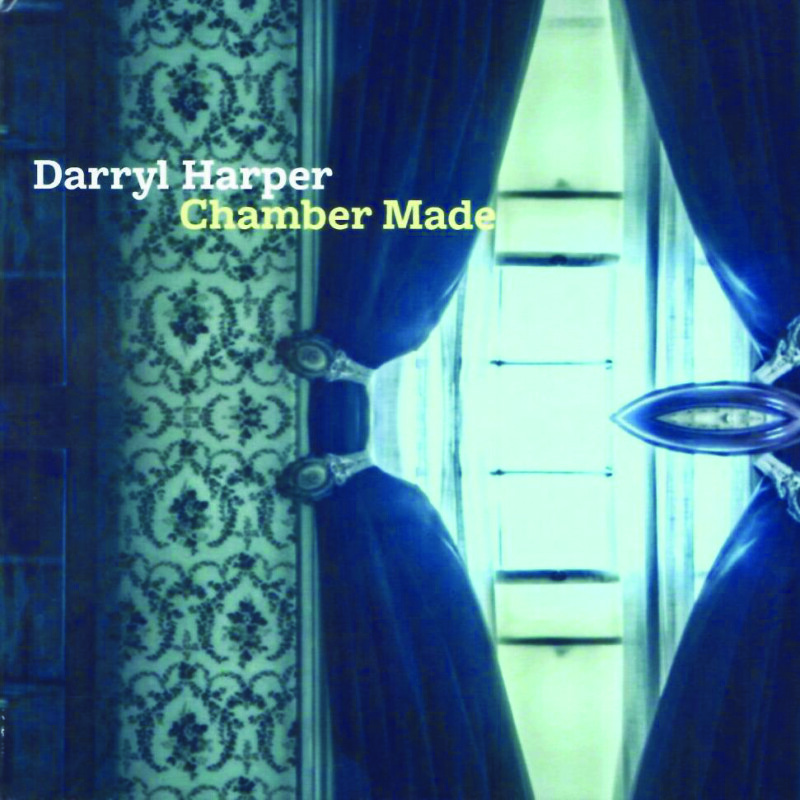
Darryl Harper, Chamber Made (Stricker Street Records)

Here we have something of a culturally relevant item, a highly successful attempt to expand the racial boundaries of concert music, specifically chamber jazz, an organic style that sounds like high-end soundtrack music made with the barest numbers of personnel. In this case it’s New England Conservatory-taught clarinetist/composer Harper working in various settings, most fascinatingly the Wistaria String Quartet in the three-part “Suite For Clarinet and String Quartet.” That’s 16 minutes of nimble, sublimely melodic tuneage that will alternately make you think of very old Disney films and the more innovative things you’ve heard in Daniel Day Lewis’s more gritty movies, as wide-ranging as that may sound. And yes, the compositions aren’t of a kind your typical listener would usually peg as coming from Black musicians, but that’s part of the point — despite all their genius, the world tended to deny even the greatest composers their due as “legitimate” concert music composers: Duke Ellington, Scott Joplin and James P. Johnson, to name three. In Harper’s case, his deep expertise with his instrument keeps every moment vibrant and attention-grabbing, even when his accompaniment is bare-bones. Complicated, tuneful and brilliant. A+

Blue Largo, Got To Believe (self-released)

Pretty nice little surprise here, a married-couple-led band from California that categorizes itself as “Americana soul.” As you may or may not know, I’m not big on “fedora bands,” the type of act that would fit in fine at some craft-beer eatery playing Van Morrison covers and things like that, and that’s what I’d expected to hear from this LP. Ten original songs here, along with a cover of Nina Simone’s Quentin Tarantino-begging torch-blues hit “Don’t Let Me Be Misunderstood,” which does go well with their core vibe: a rugged, rough and slightly muddy style, redolent of ’60s girl-groups and Amboy Dukes on a Byrds kick. Eric Lieberman and Alicia Aragon share the wheel here, the latter taking the mic for the Blues Brothers-meets-Temptations-ish album opener “A World Without Soul,” a fine vehicle for Aragon’s trill-heavy warbling. “Got To Believe” finds the pair cleverly blending their voices on a Frankie Valli-oriented joint. Nicely done all around. A

Playlist

• Friday, Sept. 9, is the next date for CD releases, and wouldn’t you know it, the first thing to appear in my list of “important new albums” is the new album from Julian Lennon, son of former Beatle John Lennon and Cynthia Lennon. The album’s title is Jude, which I assume is somehow derived from the ancient Beatles song “Hey Jude,” which I never really liked, but maybe there’s something more to this album than Julian doing his usual John Lennon karaoke and trying to ignore the fact that most millennial kids who heard his boring songs on the school bus radio back in the ’90s thought he was Hanson or maybe They Might Be Giants trying to sound like The Beatles, who knows. I mean, you remember his 1984 hit “Too Late for Goodbyes,” and how it sounded like a song made specifically for grandmothers who needed a song about riding a choo-choo train made out of candy to help the grandkids fall asleep at nap-time? I’m sure you hated it as much as I did, and that you were like “Why would the son of a Beatle ever record such a thing?” but, like me, you sort of forgave him because he never really liked Yoko, like everyone else on Earth, I mean, you did, right? Oh, whatever, Julian had a hard time of it as a kid, being that John dumped his mom for Yoko. In fact, “Hey Jude” was written by Paul McCartney to console Julian over John’s divorce from Julian’s mom; it was originally called “Hey Jules” but McCartney changed it because he thought that “Jude” was an easier name to sing. But I won’t turn this exercise into a documentary about bad music and artistic oligarchy, as I’m sure other award-winning music journalists have done that with regard to The Beatles, so with your permission I’ll move on to the entertainment portion of this column by toddling off to listen to “Save Me,” the latest song from this album, and it’s actually not bad, a dark, insistent piano line, haunted vocals. I dunno guys, maybe it’s time to give the kid a break, hah? No? OK then.

• The old-school music from bands who don’t need the money at all continues with Ozzy Osbourne hawking his 13th album, Patient Number 9! The title track features a team-up with the super-ancient Jeff Beck, who’s been on more Guitar Player magazine covers than probably anyone, mostly because throughout his career he always stubbornly refused to play anything that most people would call “listenable music,” although his “People Get Ready” team-up with Rod Stewart almost qualified, back when the Earth was still cooling from the Big Bang. As I expected, the situation where Ozzy hasn’t had a truly cool arena-metal song since his Bark At The Moon days hasn’t changed, i.e. the song is in the vein of Alice Cooper and kind of sucks, but Beck’s guitar is pretty neat of course.

Santigold, an avant-electronic artist whose real name is Santi White, releases her fourth album, Spirituals, this Friday. She’s dabbled with a lot of techno sub-genres, but the new single “Disparate Youth” finds her in sublimated dubstep mode, the main groove a barely there rinseout-ish thingamajig while she sings druggy indie-pop lines over it. It’s not catchy, but who knows, people have liked a lot worse songs.

• OK, very good, we’ll wrap up this week’s nonsense with Idaho-based indie band Built to Spill and their new album When The Wind Forgets Your Name! This includes the new single “Gonna Lose,” a completely horrible little song that’s like if Pavement and Flaming Lips had a baby and it was christened by those King Gizzard guys. This has been done a million times and a lot better, but other than that it’s terrific.

If you’re in a local band, now’s a great time to let me know about your EP, your single, whatever’s on your mind. Let me know how you’re holding yourself together without being able to play shows or jam with your homies. Send a recipe for keema matar. Message me on Twitter (@esaeger) or Facebook (eric.saeger.9).

For food cooked over fire

Zinfandel can accompany your meal from the grill

Barbecue, the quintessential way to entertain, to dine, to enjoy family and friends, can extend well into September and October. The fare is important, second only to your choice of company. In this season of sunny days and cool nights, it is a treat to set up the patio for a late afternoon repast, followed by a gathering at the firepit (always monitored in these dry conditions). The food can be chicken, bathed in a rich sweet and sour sauce; sausages, ribs or simply hamburgers, all prepared with appropriate sides, but let’s not forget the wine, the perfect wine to span this array of flavors: zinfandel.

Zinfandel can be described as American. It certainly has a long history on the American landscape. Those of us “of a certain age” remember the big bottles of Gallo, but the history of zinfandel in Europe and America goes deeper than Gallo. The grape appears to have its origins in Croatia and was introduced to the United States in the 1820s, as “Black Zinfardel of Hungary.” The grapes made their way to California in the 1850s, and by the end of the 19th century it was the most widespread variety in California. The Great Depression hit the wine industry hard, and the grape slowly crawled out of obscurity by the middle of the 20th century, with some variants, such as the rose-colored, slightly sweet white zinfandel. Thankfully that variant went the way of big hair and gold chains! Today California is planted in almost 40,000 acres from Paso Robles in San Luis Obispo County to Napa and Sonoma counties, to San Joaquin County and Mendocino County. Each of these regions produces its own signature zinfandel, owing to their different climates, soils, elevations — their respective terroirs.

There are many zinfandels to choose from, but I live by the axiom “life is too short to drink mediocre wine” so am very selective. The beauty of zinfandel is that there are many bottles to select from that are well within reach, or under $30 a bottle. I have selected two for this column.

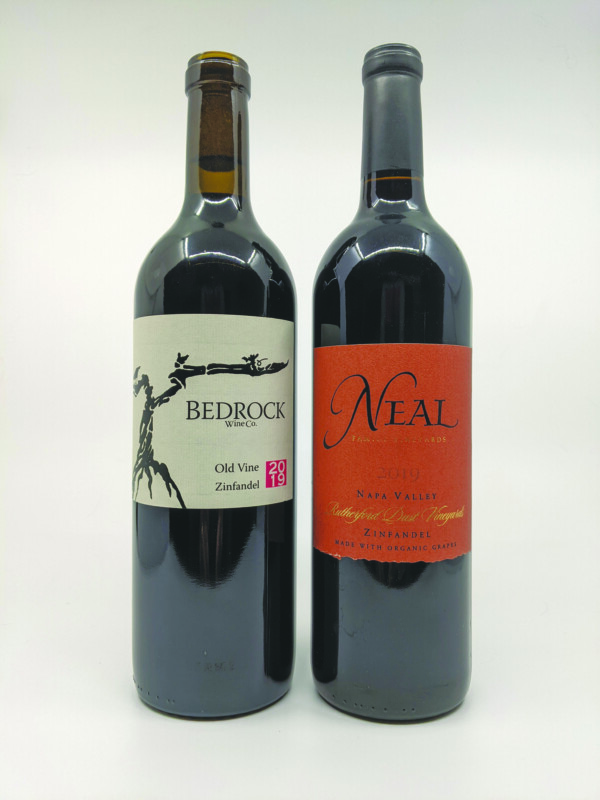
Our first zinfandel is a 2019 Bedrock Wine Co. Old Vine Zinfandel (available at the New Hampshire Liquor & Wine Outlets, originally priced at $25.99, and reduced to $23.99). Bedrock Wine Company is in Sonoma, and this wine is a creation of Morgan Twain-Peterson. The production of this wine is small, just 4,000 cases. The vines are at least 80 years old, coming from Sonoma, Alexander Valley, and the San Joaquin Valley. The color is a deep ruby red. To the nose there are blackberries and plum. These carry through to the tongue with additional notes of vanilla, with some tobacco. It has a slightly more than medium finish to it, benefiting from some aeration. It is not as bold as a cabernet sauvignon; it isn’t supposed to be. However, this bottle can be set aside for another five to 10 years to be enjoyed in future September evenings!

Our second zinfandel is a 2019 Neal Family Vineyards Rutherford Dust Vineyards Zinfandel (also available at the New Hampshire Liquor & Wine Outlets, originally priced at $32.99, and reduced to $29.99). This wine hails from the Rutherford District of the Napa Valley floor. With only 500 cases produced, it is a blend of organically grown zinfandel grapes, with some petite syrah added. 2019 was an excellent year for this wine, with this vintage rating better than any other year. The color is a deep ruby red. To the nose there are cherries, pomegranate and raspberries. These continue to the tongue along with nutmeg and white chocolate adding surprisingly complex layers of taste. This wine has the sophistication of a cabernet sauvignon, in part because it is aged in 40 percent new Hungarian oak. It is to be savored because, unfortunately, the fires of 2020 resulted in Neal’s not having a harvest, but the next vintage, 2021, will be available in March 2023.

These are two exquisite zinfandels, coming from different locations but sharing much in their very low production and high quality. They are to be enjoyed over that casual barbecue, and perhaps finished over the firepit. Enjoy the season, the warm days and cool nights; enjoy the barbecue with some excellent zinfandels.

Featured photo. Courtesy photo.

Oven-broiled ‘fried’ pickles

Air fryers have been all the rage for several years, but maybe, like me, you have resisted buying one. The recipes do look delicious and healthy, but I also wonder if I need another sizable kitchen appliance that may not be used all that often. While I delay purchasing an air fryer, I have been thinking about ways to make crispy healthy foods.

That brings us to this recipe, which features nicely crunchy “fried” pickles that are made without a single bit of oil. You may wonder how they possibly could have the correct texture, and the answer is all in the process. The first thing you need to do is let your pickle slices rest on paper towels to remove excess moisture. Don’t skimp on the time allocated for that. Second, you need to use all three coatings. The flour is key to getting the egg to adhere, and the egg is the reason you can get lots of crushed cornflakes to stick.

Outside of following the directions, the other important item is using the cooling rack. If you set the pickles directly on a baking sheet, the bottom side will become mushy. The cooling rack allows air to circulate, which gives the “fried” pickle all of its texture.

Give this recipe a try for some of the crunchiest, healthiest “fried” pickles you can make at home!

Oven-broiled fried pickles
Serves 4

4 whole dill pickles
½ cup all-purpose flour
1 egg
⅓ cup cornflakes
1 teaspoon garlic powder
Salt

Slice pickles into ¾-inch rounds.
Place on paper towels; cover with another paper towel. Press gently.
Allow to sit for at least an hour.
Preheat broiler and move oven rack to top row.
Place a metal cooling rack inside a rimmed baking sheet.
Coat cooling rack thoroughly with nonstick cooking spray.
Place flour in a small bowl.
Beat egg in a second small bowl.
Puree flakes until the size of cornmeal; place in a third small bowl.
Add garlic powder to cornflakes and mix to combine.
Coat each pickle slice in flour, then in egg, then in cornflakes.
Place coated pickle slice on cooling rack; repeat with remaining slices.
Sprinkle all of the slices with salt.
Place pan on top oven rack; broil for 1 to 2 minutes.
Flip and broil the other side for an additional 1 to 2 minutes.
Serve with ketchup or ranch dressing.

Featured Photo: Oven-broiled ‘fried’ pickles. Photo by Michele Pesula Kuegler.

In the kitchen with Abby Reed

Abby Reed of Bradford is the owner of Abby’s Cafe (17 Bridge St., Henniker, 428-4455, find them on Facebook @abbyscafe), which opened in January 2020. A stone’s throw away from the center of New England College’s campus, Abby’s Cafe offers a variety of breakfast and lunch sandwich options, as well as a selection of house pastries, including fresh doughnuts on Saturday mornings in a variety of flavors. Hot and iced coffees and espresso drinks are also available, sourced from White Mountain Gourmet Coffee. A Henniker native, Reed had on-and-off been a longtime employee of the cafe — then known as St. George’s — since 2011 before taking over the space as owner.

What is your must-have kitchen item?

I would probably say a good whisk. I really love my whisk … and it’s definitely important when we do doughnuts, and when I make frostings for any of the baked things.

What would you have for your last meal?

Definitely a big stack of blueberry pancakes, with real maple syrup.

What is your favorite local restaurant?

The Appleseed Restaurant in Bradford. … I grew up in Henniker but I live in Bradford now, and the Appleseed has always been our favorite go-to spot for breakfast on Sundays and dinner [on] other nights of the week. … They have a burger that features local beef from Eccardt Farm that is always really good.

What celebrity would you like to see eating in your cafe?

I guess I would probably say Rachael Ray, just because I grew up watching her cooking show and I’ve always been a big fan of hers, so it’d be kind of cool to see her eating at my cafe.

What is your favorite thing on your menu?

It’s a special, so it’s not something that’s on the menu every single day, but my favorite thing is the burrito. … It’s such a simple thing, but it’s so much more like a home-cooked meal to me than any of our other sandwiches. … [They have] black beans and Spanish rice, and then you can add chicken or beef to them.

What is the biggest food trend in New Hampshire right now?

Over the past few years, I’ve seen a trend in vegan foods, even with people who aren’t vegan. … It seems like people are trending more toward vegetable- and plant-based foods. There’s more popularity [with] plant-based milk options, like oat milk and almond milk, and then also just some of the dairy-free cheeses and stuff.

What is your favorite thing to cook at home?

I like to make bread. It’s very therapeutic, and the end product is always delicious. … I don’t do anything too fancy — just a white bread and a cinnamon bread.

Blueberry lemon buckle
From the kitchen of Abby Reed of Abby’s Cafe in Henniker

1½ cups white sugar
½ cup butter
2 eggs
2 teaspoons lemon extract
3 cups flour
4 teaspoons baking powder
1 teaspoon salt
1 cup milk
1 Tablespoon flour
3 cups fresh blueberries

For the topping:
½ cup butter, plus 1 Tablespoon
½ cup brown sugar
½ cup white sugar
⅔ cup all-purpose flour
1 teaspoon ground cinnamon

Preheat the oven to 350 degrees. Grease an 8-by-8-inch pan. In a large bowl, cream together the sugar, butter, eggs and lemon extract until fluffy. In a separate bowl, combine the 3 cups of flour, baking powder and salt. Add to the sugar mixture, alternating with the milk and mixing until just combined. Toss blueberries with 1 tablespoon of flour. Fold into the batter and spread in a prepared pan. Combine all of the topping ingredients in a small bowl until crumbly. Sprinkle over the batter and bake for 40 to 45 minutes or until a toothpick comes out clean.

Featured photo: Abby Reed, owner of Abby’s Cafe in Henniker. Courtesy photo.

Stay in the loop!

Get FREE weekly briefs on local food, music,

arts, and more across southern New Hampshire!